
The Ultimate Guide To Rigid Box Materials And Construction
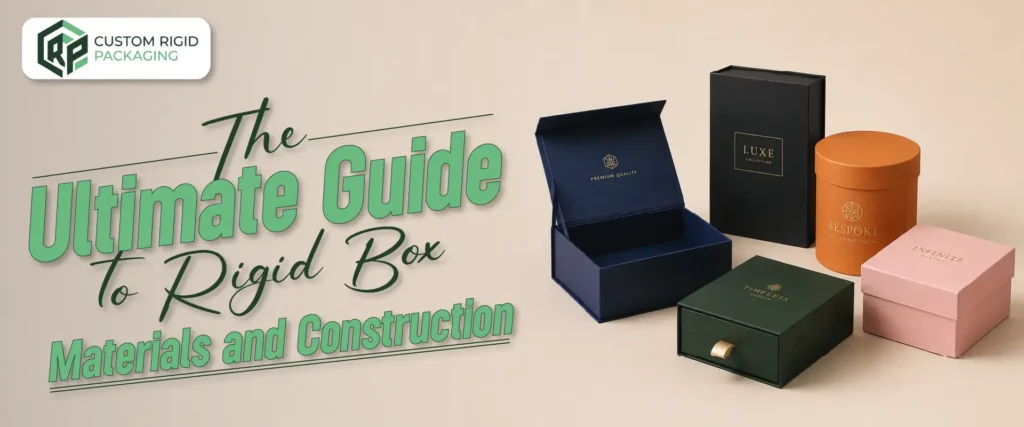
The packaging holds utmost importance if you want to create brand awareness and make your brand’s name in the marketplace. Imagine if the order from your brand reaches the customers and the edges of the boxes are curved and damaged; how much bad impact will it leave on your customers about your brand? To overcome this, you can shift to rigid boxes. Many high-end luxury businesses and brands have understood this and already shifted to rigid boxes. This makes customers believe that they are shopping from a brand that values the customer’s money. Here in this guide, you will learn about the material that is used to make these rigid boxes and the process by which they are made.
What Are Rigid Boxes?
A rigid box is a special type of packaging box that is already assembled. It has a hard material due to which this box remains upright and holds its shape. This box is also called a set-up box. You must have seen this kind of box packaging in perfumes and many boutiques that understand that packaging is not only for protection but also the first physical interaction of the consumer with your product. So it must be top-notch. Many tech products are also sold in these rigid boxes because they need extra protection, which these boxes provide.
The Materials That Are Used To Make Rigid Boxes
The one thing that decides whether a product will have a high level of strength or not is the base material. The rigid boxes have a strong base because of the materials that are used to make them. The following is a short guideline of the materials that are used in the making of these boxes:
| Material | Properties | Appearance | Best Used For |
|---|---|---|---|
| Grey Chipboard | Made from recycled fibers compressed into high-density sheets. | Matte grey with a coarse texture | Internal structure of heavy-duty rigid boxes |
| Duplex Chipboard | Multilayer chipboard with a smooth and neat outer layer. | One side is clean white while the other is grey or brown. | Rigid box bases that require a white printable surface |
| White Kraft | Bleached kraft paper with a bright surface suitable for detailed printing. | Smooth and solid white paper | Modern and premium packaging designs |
| Natural Brown Kraft | Unbleached, biodegradable material with a natural fiber appearance. | Rustic, textured brown look | Homemade products and eco-conscious brands |
| SBS / C2S Clay-Coated Cardboard | Premium coated paperboard with a smooth, bright surface. | Ultra-white and smooth surface | Luxury and designer boxes |
The Wrapping Paper Used In Making
The wrapping papers are the ones that are printed and then glued to the boxes because the box surface can’t be printed directly. For this purpose, the following types of papers are used:
Art paper
This is a highly coated sheet that is most commonly used for multi-color CMYK printing. If you want to print complex designs and a brand’s logo, this paper ensures that the ink remains clear.
Kraft paper
Many people now demand that brands choose environmentally friendly options. This paper gives an organic and rustic look.
Specialty metallic paper
This is used for luxury items for which the brand wants exclusive shiny and reflective packaging. This has foil coating and reflective particles that catch and reflect light in a beautiful manner. Different finishing and coating techniques are used for this paper, such as foil stamping, spot UV, and debossing.
Velvet and suede paper
This one is used for limited edition or occasion-based products. The velvet and suede papers are best for watches and high-end jewelry.
The Process Of Making Custom Rigid Boxes
Making the best rigid boxes highly depends on the rigid box manufacturing process. It involves the following steps and is done under supervision and high-level machinery so that good-quality products are made:
-
Board cutting
Large industrial machinery is used to cut the sheets of cardboard according to the size of the box. It forms the lines and creases where the box has to be folded.
-
Corner taping
Operators fold the sheets along the lines into a box form, which is then glued together using strong heat-activated adhesive tape on the corner. Thus, this process is known as corner taping.
-
Printing
On the other side, the printers print the required design in the selected wrapping paper. The paper then undergoes final finishing coatings, which protect it and give it a neat finish.
-
Glueing
The printed wrapping paper is then carefully applied onto the box with an even layer of glue. The machine carefully puts the box according to the dimensions of the paper and the printed design.
The Type Of Custom Inserts Used
The main aim of the rigid box is the protection of the product. This role is incomplete without inserts. The inserts are used to keep the products in place and protect them from damage during transport. The following are the types of inserts that are used in rigid boxes:
| Insert Material | Level of Protection | Visual Presentation | Best Suited For |
|---|---|---|---|
| Cardboard / Paperboard | Moderate | Natural cardboard with a clean, simple look | Cosmetics and lightweight products |
| Foam | Very High | Maximum shock absorption and cushioning | Sensitive electronics, perfumes, and glass products |
| Pulp | High | Made from recycled paper pulp with an earthy appearance | Tech items and eco-conscious brands |
| Plastic Trays | High | Available in glossy or matte finishes | Multi-item product trays |
| Fabric Inserts | Moderate | Velvet or silk with a soft and luxurious feel | Premium gifting products |
Common Types Of Rigid Boxes
There are different designs of the boxes that serve different purposes. You cannot use the same style for different types of products. It is really important to choose the right box style for your products:
Two-Piece Lid And Base
This two-piece rigid box has a lid that can be separated completely from the base, and thus it is named “two-piece.” It is ideal for smartphones, shoes, and chocolates.
Magnetic Flip-Top Closure
This box has a magnet inside the lid that is hidden in the layers. When closed, this box closes with a click sound that gives this box a luxury feel. This is mostly used for limited edition or gift boxes.
Drawer Boxes
The rigid drawer boxes are the ones that are also known as sleeve boxes. They have sleeves in which the other part slides easily. This box often has a ribbon that is used to pull the box out of the sleeve. They are used for watches and other jewelry products.
Shoulder And Neck Boxes
This box has a raised neck upon which the lid rests. Many brands use a distinct color for the neck to give these boxes visual appeal. Many high-end perfumes and boutique clothes are stored and packaged in these types of boxes.
Collapsible Rigid Box
These are not like the traditional rigid boxes that occupy so much space in the warehouse since they come in pre-assembled form. They have creases upon which the boxes can be folded and stored in the warehouse where the space is minimal.
Transform Your Packaging Now!
Now that you have come across the materials that are used to make rigid boxes and the process of manufacturing these boxes, you should upgrade your packaging to these premium boxes. These boxes ensure that your package gets delivered safely without any damage. If you are still confused about rigid boxes, you can contact our team of Custom Rigid Packaging by visiting our website.